

No Fees, No Royalties — Why This Model Scales For Owners
Imagine you spot a vacant high-street unit in Leeds or a spacious retail park unit in York and can see a premium kitchen showroom taking shape. If you’re an existing independent kitchen retailer, a multi-site retail manager, or an ambitious owner‑operator in the UK property market, this article tells you whether Schmidt is a practical route to scale and what to expect in the first 24 months.
In our experience, owners who understand retail conversion, team hiring and local marketing accelerate faster. Read on for a clear view of day‑to‑day operations, the economics behind “no fees, no royalties”, funding routes and the exact support Schmidt provides. For an overview, see about Schmidt and the full business model.
How Showroom Ownership Works Day‑to‑Day
You run a compact in‑showroom team, host design consultations and manage installations and aftercare. Schmidt handles manufacturing and logistics from European facilities, so you focus on sales, service and team performance. A common issue we see is owners scheduling too many low‑quality appointments; head office helps filter inbound leads so your diary stays productive.
No prior design experience is required—training and intuitive 3D/VR tools make presenting made‑to‑measure kitchens straightforward. If you want to see the retail flow in practice, visit the showroom page.
What Most People Get Wrong
Many assume product quality alone drives sales. In our experience, conversion depends equally on appointment qualification, presentation skills and a tightly managed install calendar—these are the levers that turn enquiries into profitable projects.
Economics: No Fees, No Royalties, Strong Margins
Zero franchise fees and zero royalties protect your gross margin from day one, letting you reinvest in people and local marketing. High average order values and multi‑room projects underpin healthy unit economics in a premium environment.
Cash flow is positive because customers pay deposits and balances before goods are paid for, and Schmidt’s contribution eases early months. For a transparent breakdown, see our financials and the kitchen franchise investment costs for 2026.

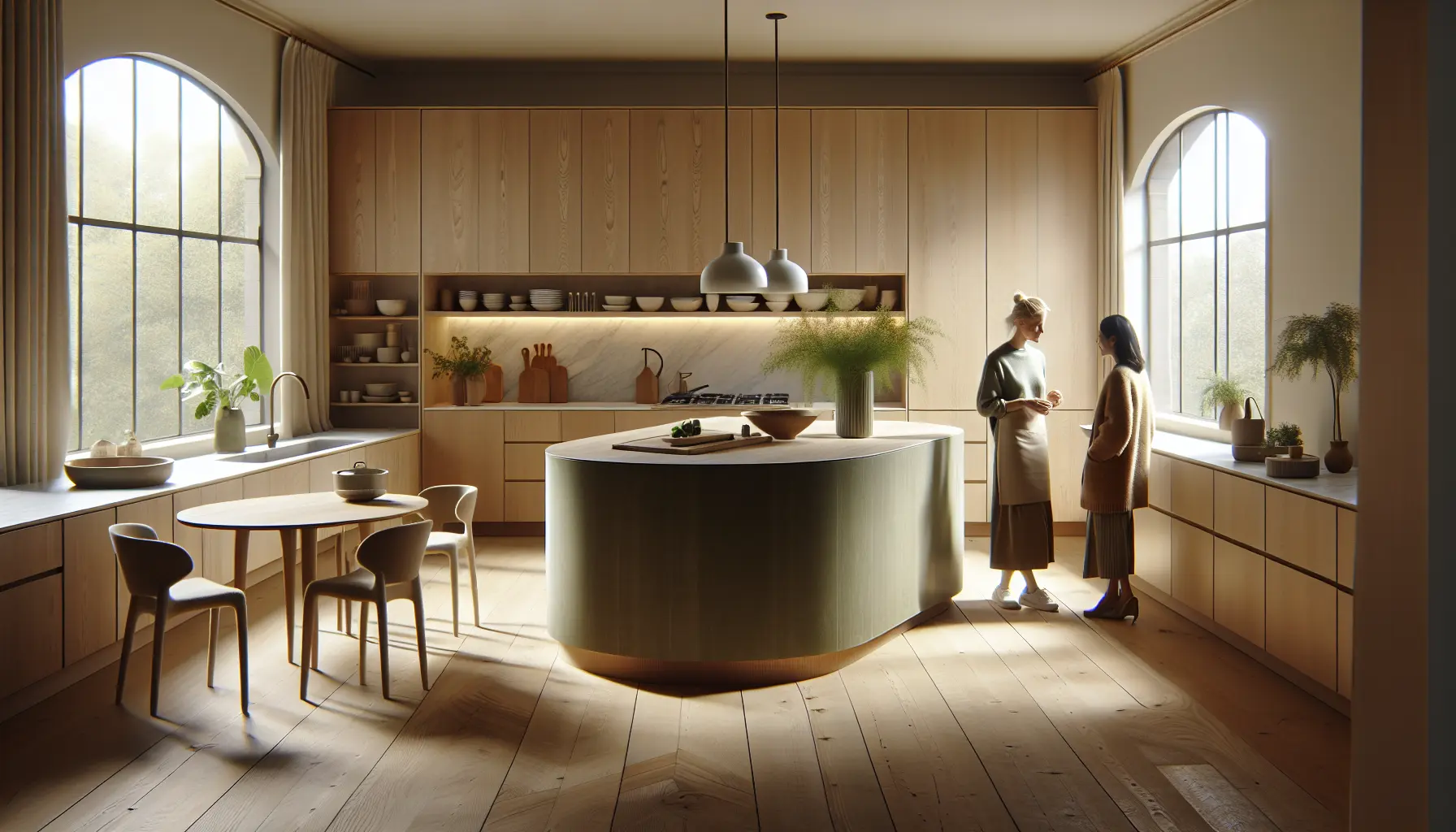
This image was generated with AI and may not always represent the product or service exactly.
Recurring Income: Lifetime Value From Bespoke Interiors
Made‑to‑measure projects commonly lead to follow‑on rooms—utility areas, wardrobes, home offices—and that raises average order value and lifetime value. Referrals and strong aftercare produce a steadier pipeline in mid‑to‑high‑end neighbourhoods, which improves utilisation for designers and fitters.
Scaling To £1m+ And Beyond: The Practical Path
The usual path to £1m+ turnover is a focused “team of three”: an owner‑manager, two designers (or designer plus coordinator), and reliable contracted fitters. CRM, dashboards and VR tools make performance visible and repeatable, and each exclusive territory contains a large base of qualifying homes.
Benchmarks are useful but not guarantees—use them to test your local catchment and planning assumptions before committing to sites or leases.
Support That De‑Risks Growth
From first call to opening day, Schmidt provides end‑to‑end support: training through the Schmidt Academy, territory planning, site selection guidance, showroom fit‑out and pre‑launch marketing. We also support IT, software and supplier relationships so you can focus on customers and hiring the right people.
When This Doesn’t Apply
If you prefer a low‑time, passive investment or don’t want day‑to‑day retail responsibility, this model isn’t the best fit. Schmidt rewards hands‑on operators who lead teams and coach to commercial targets.
Market Opportunity: Premium Positioning With Global Proof
UK homeowners continue to invest in quality and storage‑rich multi‑functional spaces. Schmidt’s global footprint and European manufacturing back up the brand story, helping customers convert and trust the product offering. Sustainability in materials and production is increasingly important to higher‑value buyers and supports stronger price points at point of sale.
Investment, Funding And ROI Timeline
Typical personal investment is around £70,000 within a total project of £250k–£450k. Schmidt typically partners with lenders (NatWest is a common route) to structure funding for fit‑out, training and launch costs. Positive working capital and the Schmidt Contribution support early cash flow, and many owners target break‑even within 1–2 years—figures are indicative, not guaranteed.
For practical funding routes, see what finance options are available for new kitchen franchisees.
Who Thrives With Schmidt
Owners who succeed are proactive, commercially sharp and comfortable leading people. Backgrounds in business management, sales leadership or multi‑site retail transfer well because the role focuses on conversion coaching, pipeline management and installation scheduling more than pure design.
Proof Of Performance: Real Showrooms, Real Results
Across the network, partners have expanded to second showrooms and recorded standout periods when appointment flow and install efficiency aligned. Consistent follow‑up, disciplined conversion routines and a clear customer journey are the behaviours that produce repeatable results.
Quick Checklist
- Confirm local catchment of qualifying homes and competitor mix
- Plan a hire timeline for owner, designer(s) and project coordinator
- Validate site costs, lease terms and fit‑out estimates
- Agree funding route and cashflow buffer with Schmidt and lender
- Book Academy training and pre‑launch marketing dates
Next Steps: Secure Your Territory And Start Your Build
Survey available territories and their demographics, then map your timeline to launch. Priority catchments are open across the UK; for current options see locations available. The typical path is: discovery, territory confirmation, site selection, lease, fit‑out, training and pre‑launch marketing.
Request the prospectus, speak to the UK team and outline your route to a premium showroom opening within months, not years.
FAQs
How Long Does It Typically Take To Open A Showroom?
Most owners progress from enquiry to opening in 6–9 months, depending on site availability and fit‑out complexity. A detailed project plan is essential to keep momentum.
Do I Need Design Experience To Run A Showroom?
No. Schmidt’s Academy and intuitive 3D/VR tools train owners and designers to present premium solutions. Commercial leadership and hiring the right designers matter more than previous design credentials.
What Funding Options Should I Consider First?
Start with a lender experienced in retail and fit‑out finance; NatWest is a commonly used partner. Combine lender support with the Schmidt Contribution to manage early cash flow.
Can I Expand To A Second Showroom?
Yes. Territories are exclusive and there is a clear pathway to a second site once KPIs and operational processes are proven. Multi‑site owners benefit from shared teams and central marketing demand.